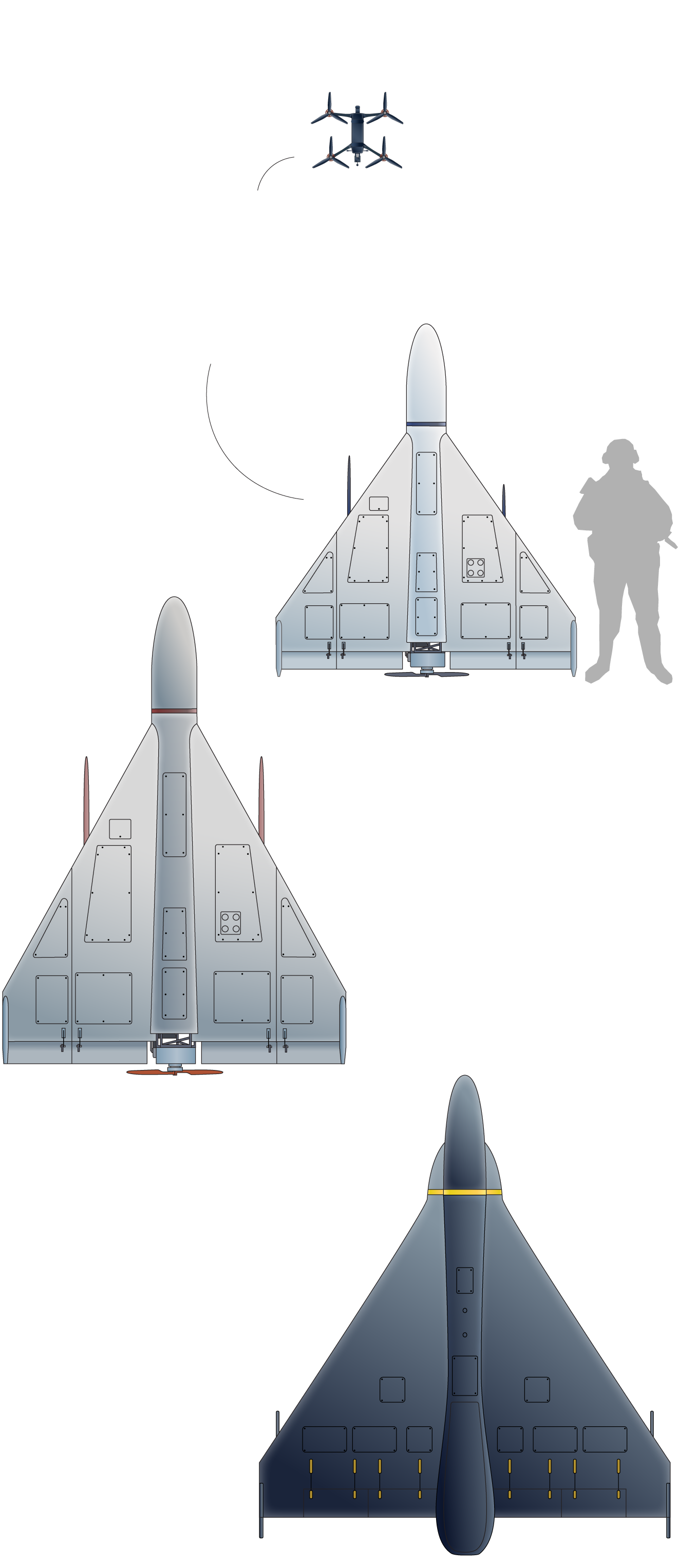
Here are some of the attack drone types commonly deployed by Russia:
First-person view
(FPV) drones
Russia uses a variety of FPV drones
on the front lines with range of up to
15 km (9 miles) on average. These
drones can carry small explosive
payloads, including a grenade capable
of destroying a tank or a foxhole.
But larger Shahed drones are most
commonly used to attack cities and
towns beyond the battlefield.
Shahed-131 / Geran-1
Range: up to 900 km (559 mi)
Payload: 10–15 kg (22–33 lbs)
To scale
Shahed-136 / Geran-2
Range: up to 2,000 km (1,240 mi)
Speed: up to 185 km/h (115 mph)
Payload: 40 kg (88 lbs)
These Iranian-designed drones have been
adapted by Russia, which now domestically
produces the Geran-2 drone at its secretive
Alabuga drone factory.
It plans to increase production capacity to
about 200 Shahed-type drones per day
by the end of 2025, according to Ukraine’s
Defense Intelligence.
Shahed-238 / Geran-3
Range: up to 2,500 km (1,553 mi)
depending on configuration
Speed: up to 600 km/h (373 mph)
Payload: 50–300 kg (110–661 lbs)
Russia has also begun production on a newer
jet-powered variant of the Shaheds. This drone
can travel much faster than the Geran-2 drone,
making it harder to intercept.
But the heat emitted by the jet engine
makes the drone vulnerable to being
shot down by heat-seeking air defense
systems, according to a Ukrainian
Air Force spokesperson.
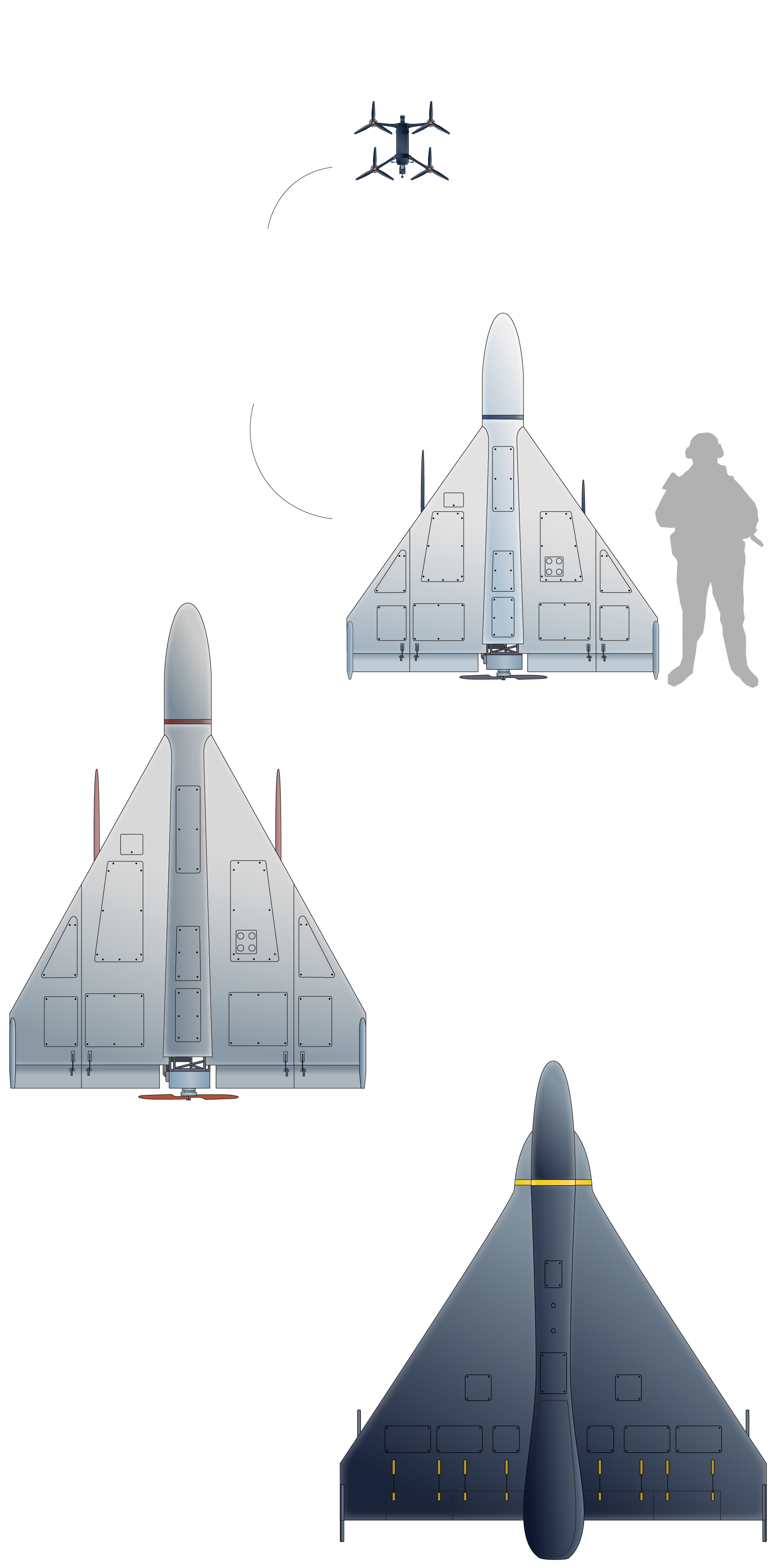
Here are some of the attack drone types commonly deployed by Russia:
First-person view
(FPV) drones
Russia uses a variety of FPV drones
on the front lines with range of up to
15 km (9 miles) on average. These
drones can carry small explosive
payloads, including a grenade capable
of destroying a tank or a foxhole.
Shahed-131 / Geran-1
Range: up to 900 km (559 mi)
Payload: 10–15 kg (22–33 lbs)
But larger Shahed drones are most
commonly used to attack cities and
towns beyond the battlefield.
To scale
Shahed-136 / Geran-2
Range: up to 2,000 km (1,240 mi)
Speed: up to 185 km/h (115 mph)
Payload: 40 kg (88 lbs)
These Iranian-designed drones have been
adapted by Russia, which now domestically
produces the Geran-2 drone at its secretive
Alabuga drone factory.
It plans to increase production capacity to
about 200 Shahed-type drones per day
by the end of 2025, according to Ukraine’s
Defense Intelligence.
Shahed-238 / Geran-3
Range: up to 2,500 km (1,553 mi)
depending on configuration
Speed: up to 600 km/h (373 mph)
Payload: 50–300 kg (110–661 lbs)
Russia has also begun production on a newer
jet-powered variant of the Shaheds. This drone
can travel much faster than the Geran-2 drone,
making it harder to intercept.
But the heat emitted by the jet engine
makes the drone vulnerable to being
shot down by heat-seeking air defense
systems, according to a Ukrainian
Air Force spokesperson.

Here are some of the attack drone types
commonly deployed by Russia:
First-person view
(FPV) drones
Russia uses a variety of FPV drones
on the front lines with range of up to
15 km (9 miles) on average. These
drones can carry small explosive
payloads, including a grenade capable
of destroying a tank or a foxhole.
But larger Shahed drones are most
commonly used to attack cities and
towns beyond the battlefield.
Shahed-131 / Geran-1
Range: up to 900 km (559 mi)
Payload: 10–15 kg (22–33 lbs)
To scale
Shahed-136 / Geran-2
Range: up to 2,000 km
(1,240 mi)
Speed: up to 185 km/h
(115 mph)
Payload: 40 kg (88 lbs)
These Iranian-designed drones have been
adapted by Russia, which now domestically
produces the Geran-2 drone at its secretive
Alabuga drone factory.
It plans to increase production capacity to
about 200 Shahed-type drones per day
by the end of 2025, according to Ukraine’s
Defense Intelligence.
Shahed-238 / Geran-3
Range: up to 2,500 km
(1,553 mi) depending on
configuration
Speed: up to 600 km/h
(373 mph)
Payload: 50–300 kg
(110–661 lbs)
Russia has also begun production on a newer
jet-powered variant of the Shaheds. This drone
can travel much faster than the Geran-2 drone,
making it harder to intercept.
But the heat emitted by the jet engine
makes the drone vulnerable to being
shot down by heat-seeking air defense
systems, according to a Ukrainian
Air Force spokesperson.

Here are some of the attack drone
types commonly deployed
by Russia:
First-person view
(FPV) drones
Russia uses a variety of FPV drones
on the front lines with range of up to
15 km (9 miles) on average. These
drones can carry small explosive
payloads, including a grenade capable
of destroying a tank or a foxhole.
But larger Shahed drones are most
commonly used to attack cities and
towns beyond the battlefield.
Shahed-131 / Geran-1
Range: up to 900 km
(559 mi)
Payload: 10–15 kg
(22–33 lbs)
To scale
Shahed-136 / Geran-2
Range: up to 2,000 km
(1,240 mi)
Speed: up to 185 km/h
(115 mph)
Payload: 40 kg (88 lbs)
These Iranian-designed drones have been
adapted by Russia, which now domestically
produces the Geran-2 drone at its secretive
Alabuga drone factory.
It plans to increase production capacity to
about 200 Shahed-type drones per day
by the end of 2025, according to Ukraine’s
Defense Intelligence.
Shahed-238 / Geran-3
Range: up to 2,500 km
(1,553 mi) depending on
configuration
Speed: up to 600 km/h
(373 mph)
Payload: 50–300 kg
(110–661 lbs)
Russia has also begun production on a newer
jet-powered variant of the Shaheds. This drone
can travel much faster than the Geran-2 drone,
making it harder to intercept.
But the heat emitted by the jet engine
makes the drone vulnerable to being
shot down by heat-seeking air defense
systems, according to a Ukrainian
Air Force spokesperson.